|
Location: 首页 >> NewsInfo >> LatestNews >> Inspiring Research Thinking, Advancing Interdisciplinary Innovation, Supporting the Growth of Young Scholars publish date:2026-09-18
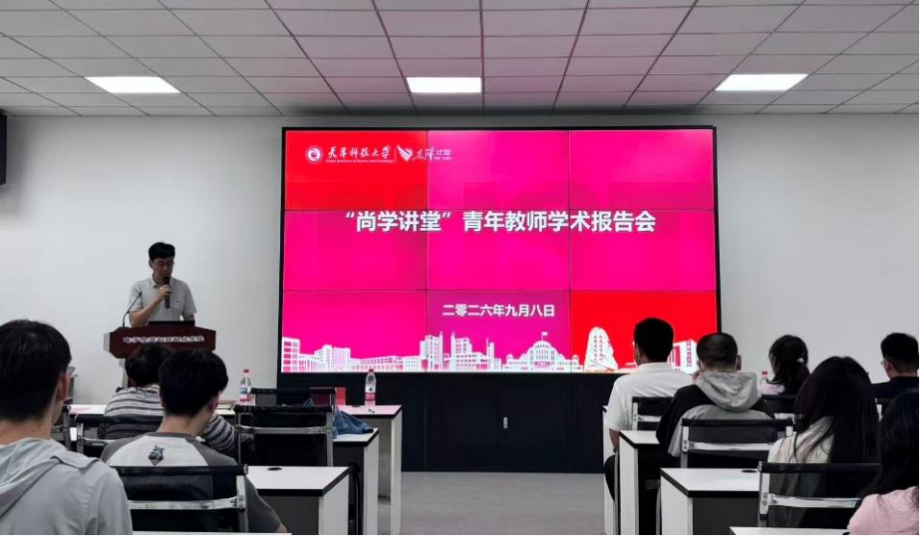
To promote interdisciplinary convergence, to carry out frontier research focusing on the K11 key priority areas, to fully unleash the innovation vitality of faculty and students in science and technology, to continuously enhance research and innovation capacity, and to support the building of a high-level research university, the College of Electronic Information and Automation recently hosted the "Shangxue Lecture Hall" Young Faculty Academic Exchange Seminar, themed Intelligent Design and Manufacturing of Integrated Circuits. Mr. Song Wei, Deputy Director of the Office of Science and Technology of Tianjin University of Science and Technology (TUST), attended the event. Associate Professor Li Jixiang, Deputy Head of the College of Electronic Information and Automation, presided over the meeting. More than 70 faculty and student representatives from the College of Electronic Information and Automation, the College of Mechanical Engineering and the College of Artificial Intelligence took part in the seminar. The seminar opened with an address by Mr. Song Wei. He fully affirmed the role of young faculty as a vital new force and the mainstay in discipline development, scientific research and talent cultivation. He noted that young faculty are the key force sustaining and advancing the College's research endeavour, and that the University attaches great importance to the nurturing and growth of young talent, continuously strengthening policy safeguards and resource support across multiple dimensions, including project application, research platform development and the delivery of high-level achievements. He encouraged the young faculty present to make good use of the "Shangxue Lecture Hall" as an academic exchange platform: to actively share frontier research results, to deepen the clash of ideas and mutual academic inspiration, to pinpoint the breakthroughs needed to tackle research challenges, and to pool their strength for collaborative innovation. He further urged them to conduct research grounded in their disciplines' own characteristics and closely attuned to the real needs of industry, so as to strive for more high-quality research outputs and inject strong youthful momentum into the high-quality development of the University's and the College's disciplines.
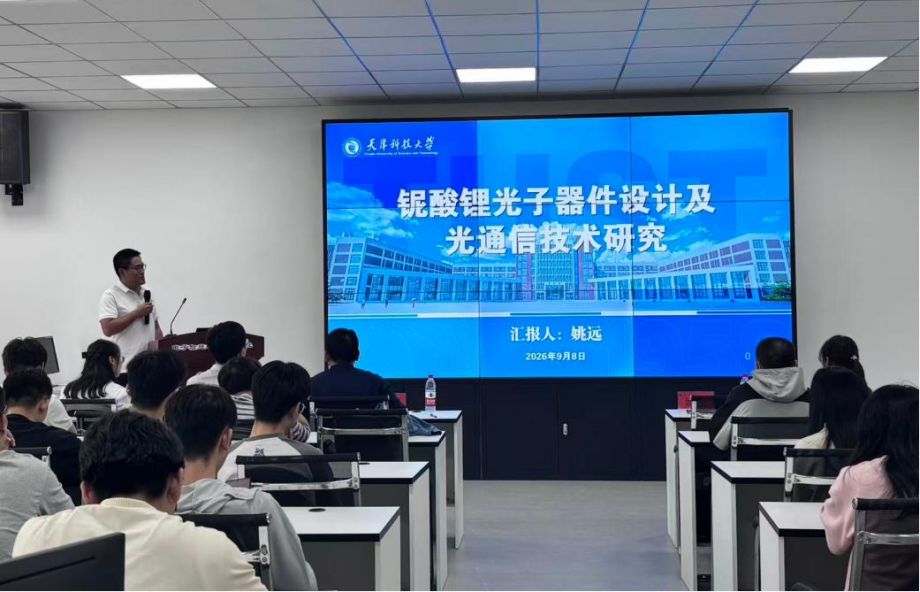
Following the opening remarks, the session moved into the academic presentation segment. Four young faculty members from the College of Electronic Information and Automation, the College of Mechanical Engineering and the College of Artificial Intelligence took the stage in turn and delivered a series of excellent academic presentations. The reports covered a number of frontier research directions related to integrated circuits, including photonic devices, communication signal processing, brain-inspired chips and machine vision. Dr. Yao Yuan presented a report entitled Design of Lithium Niobate Photonic Devices and Research on Optical Communication Technology. The report centred on the unique performance advantages of lithium niobate materials, explained the core key technologies of photonic device design, analysed the technical bottlenecks that urgently need to be resolved in the field of optical communications, shared the results accumulated by his research group in device development, and offered an outlook on the application prospects of this technology in high-speed communication scenarios.
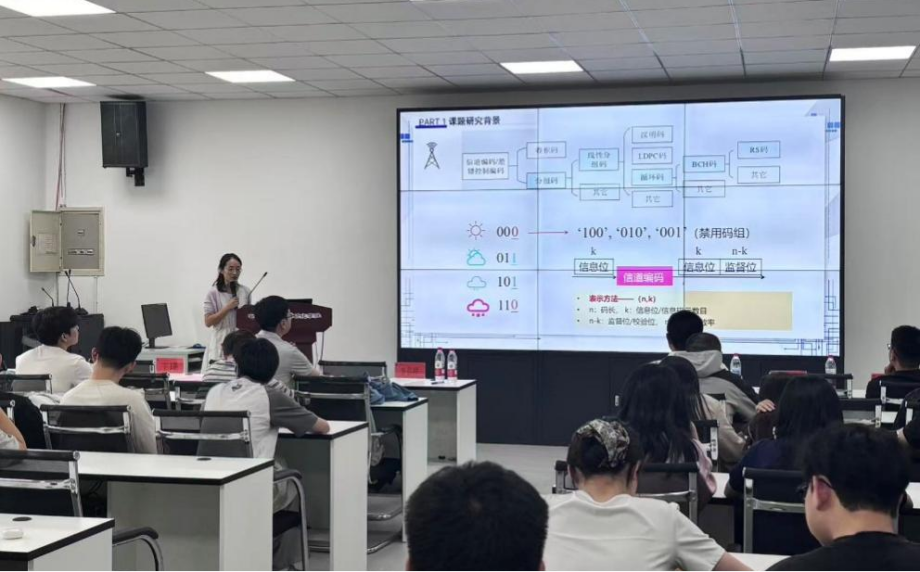
Dr. Chang Yanyan delivered a special report entitled Effective Recovery of Coded Information under Non-Cooperative Communication Conditions. Targeting the complex and ever-changing real-world environment of non-cooperative communication, she outlined the technical approaches to recovering coded information, analysed the limitations and shortcomings of existing algorithms, and introduced a technical processing scheme that had been refined through iterative optimisation, thereby providing new ideas and new pathways for communication information processing in complex environments.
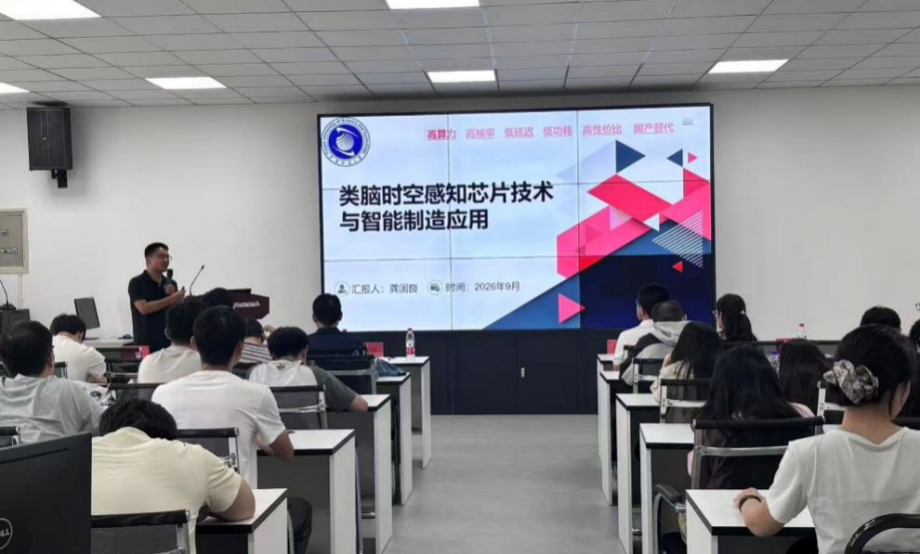
Dr. Gong Guoliang presented a report entitled Brain-Inspired Spatiotemporal Perception Chip Technology and Its Application in Intelligent Manufacturing. He interpreted the underlying technical principles of brain-inspired chips, introduced the latest R&D progress in spatiotemporal perception chips, and — in light of actual industrial conditions in intelligent manufacturing — demonstrated the implementation pathways and broad application potential of deploying brain-inspired chip technology in industrial settings.
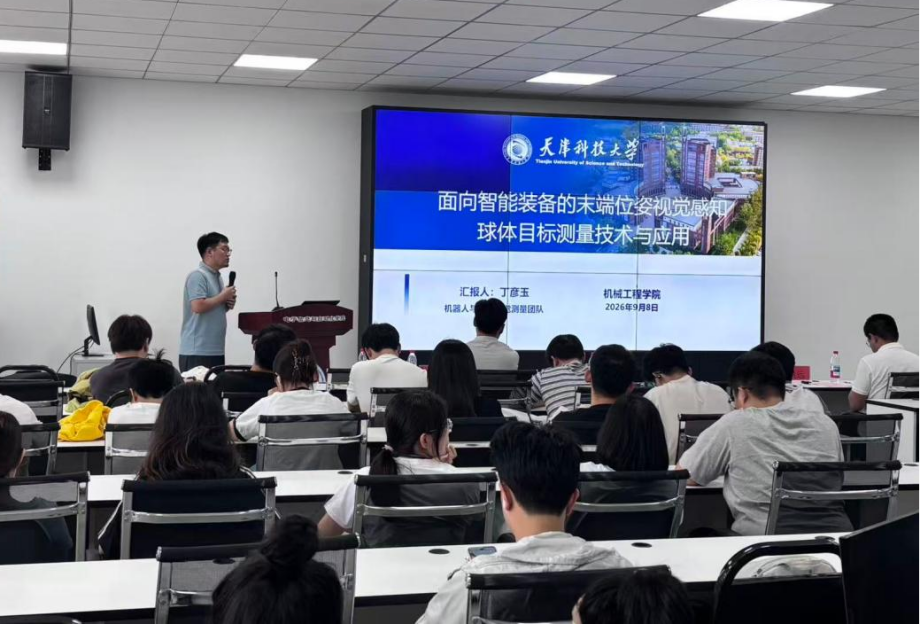
Dr. Ding Yanyu presented End-Effector Pose Visual Perception for Intelligent Equipment: Spherical Target Measurement Technology and Applications. Closely addressing the practical needs of visual perception for intelligent equipment, he explained the core algorithms for spherical target measurement, presented the experimental data and results of the related technology, and shared a number of practical application cases of this technology in the field of equipment inspection.
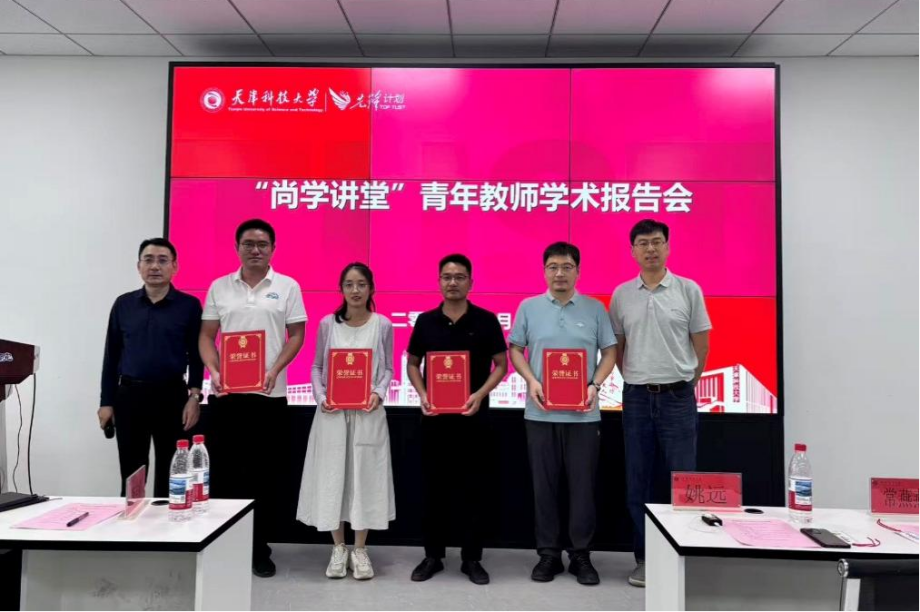
The atmosphere at the seminar was lively and academically intense. The faculty and students in attendance listened attentively and engaged in full and active discussion of such hot topics as the technical pain points, experimental optimisation schemes and engineering translation of research results raised in the reports, achieving an exchange and mutual learning of ideas across different research directions. After the presentations, a certificate awarding ceremony was held on site. Mr. Song Wei presented the "Shangxue Lecture Hall" Speaker Certificates of Honour to the four young faculty speakers, giving full recognition and encouragement to their dedicated pursuit of research and their spirit of bold exploration.
The "Shangxue Lecture Hall" Young Faculty Academic Exchange Seminar concluded with complete success. The event built a high-quality platform for young faculty to present their research results and exchange academic ideas, helping them broaden their research horizons, opening channels for cross-disciplinary communication and enhancing mutual understanding among researchers in different fields. Going forward, the College of Electronic Information and Automation will continue to hold such academic seminar activities on a regular basis, continuously improve and refine the support system for the growth and cultivation of young faculty, and guide all faculty to deepen interdisciplinary integration and concentrate their efforts on tackling key research challenges, so as to comprehensively enhance the College's overall research strength and the quality of its discipline development. |