|
Location: 首页 >> NewsInfo >> LatestNews >> Carrying Forward the Red Legacy of the Long March, Building a Future of National Defence Through Science and Innovation publish date:2026-10-15
To meet the requirements for building an integrated ideological and political education system spanning primary, secondary and tertiary levels, to advance the integrated "science and technology + ideological and political education" approach to cultivating students, to commemorate the 90th anniversary of victory in the Red Army's Long March, to bridge the ideological and political education chain across primary, secondary and tertiary schools, to pass on the great Long March spirit and to deepen young people's patriotic sentiments, the College of Electronic Information and Automation of Tianjin University of Science and Technology (TUST) recently visited Beitang School in Binhai New Area to carry out the joint primary–secondary–university practice activity themed "Carrying Forward the Red Legacy of the Long March, Building a Future of National Defence Through Science and Innovation". Teachers of ideological and political education from primary and secondary schools in Muhe Township, Zhangjiachuan Hui Autonomous County, Gansu Province, joined the joint activity online.
The activity was jointly organised by the Zhidian Science and Innovation Club of the College of Electronic Information and Automation of TUST, together with student representatives of the Long March Spirit Publicity Group and Beitang School of Binhai New Area. Drawing on the strength of university student societies, the activity organically combined narration of Long March revolutionary stories, national defence science education and hands-on science and innovation experience, enabling university students to lead their primary and secondary school counterparts and carrying the revolutionary spirit forward from generation to generation.
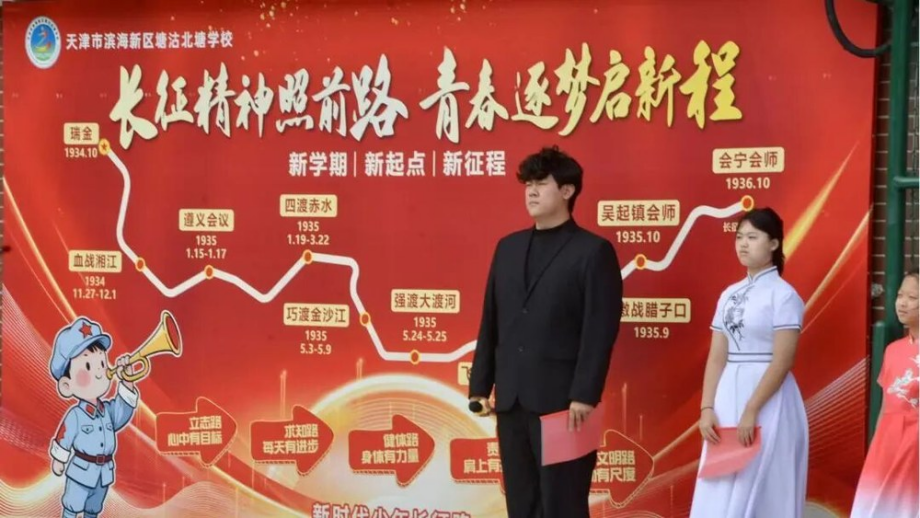
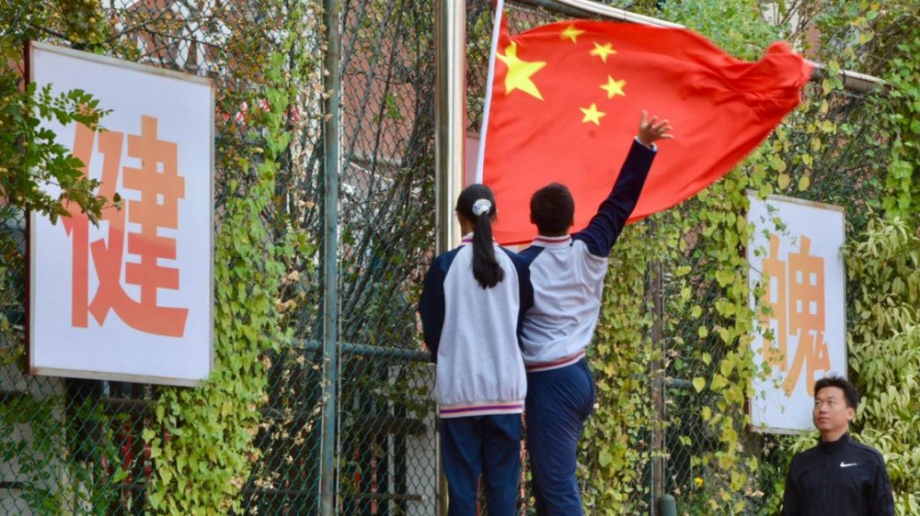
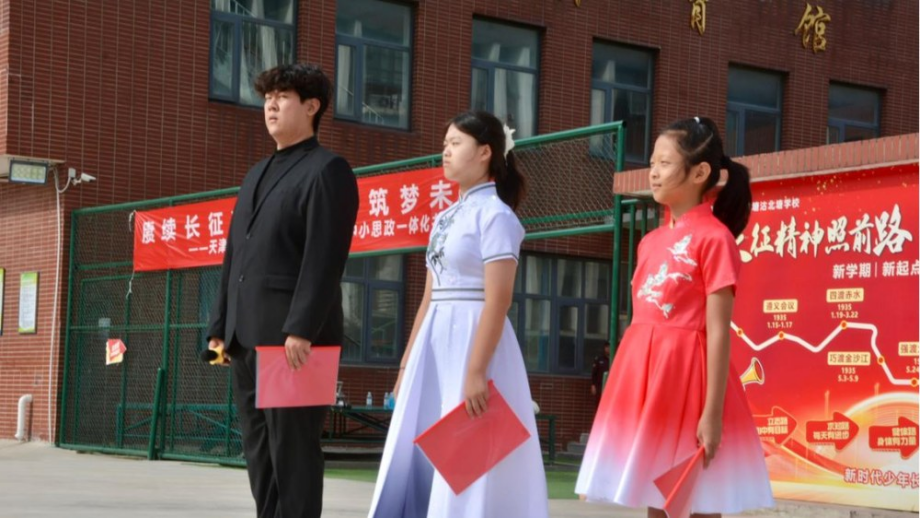
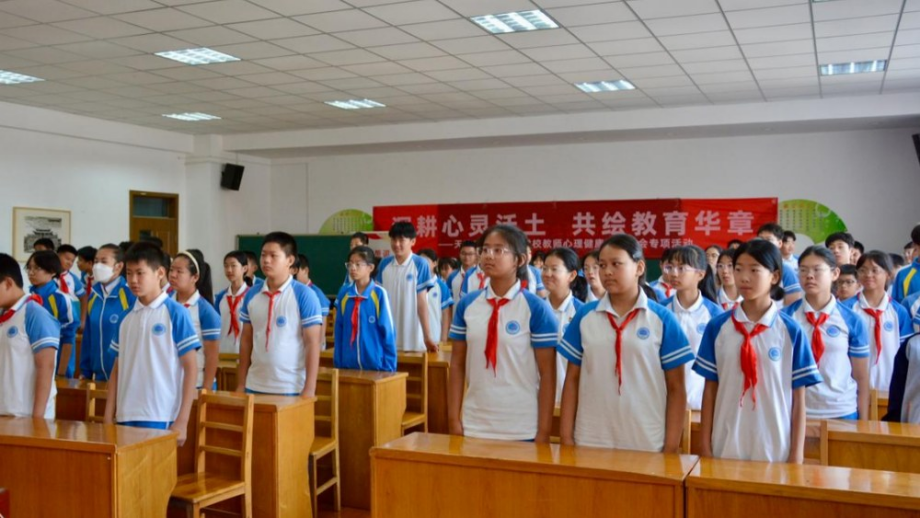
The activity opened with a solemn flag-raising ceremony. Members of the Beitang School national flag guard performed the full ceremony of marching out the flag, raising the flag and singing the national anthem, while university, secondary and primary school students gave eye salutes and Young Pioneer salutes respectively. The solemn atmosphere of the ceremony nurtured a deep sense of nation and home in all the students present. Afterwards, representatives of the university, secondary and primary school students jointly recited passages on the theme of the Long March; through the resounding recitation, they came to grasp the spiritual core of "youth saving the nation, youth strengthening the nation" and looked back upon the arduous years of the Long March.
After the flag-raising ceremony, a number of themed activities were carried out simultaneously at separate venues.
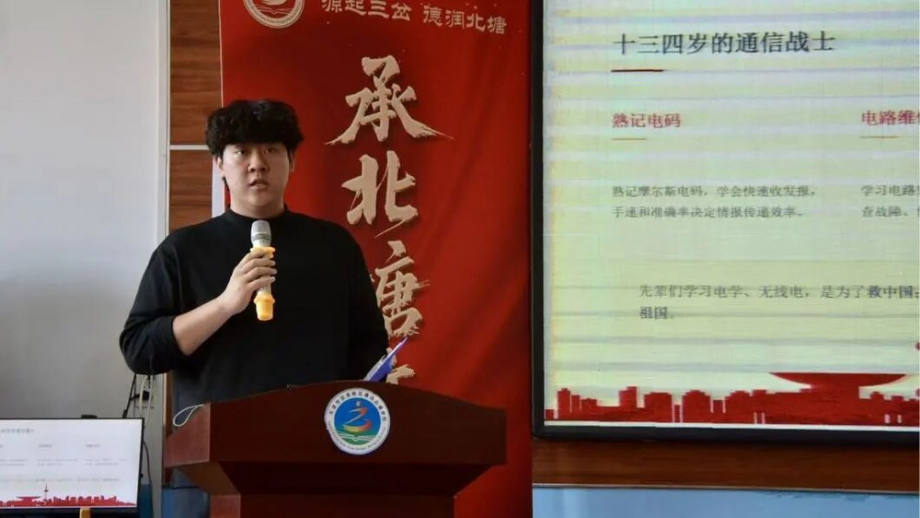
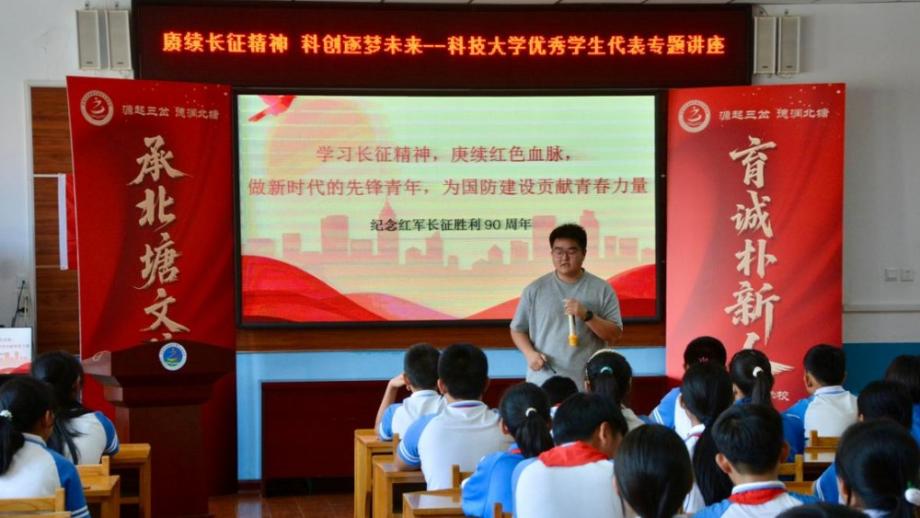
In the national defence science mini-class held in the large conference room on the second floor, the practice team from the College of Electronic Information and Automation of TUST delivered a popular-science lesson on the history of Long March communications for sixth-grade pupils. The pupils revisited the moving stories of "half a radio set" and the young signal soldiers of the Long March era, and learned about the vital role radio communications played along the Long March route. They also studied the national defence applications of modern military-industrial chips and robots, coming to understand — through the contrast between history and the present — the contemporary value of national defence science and technology.
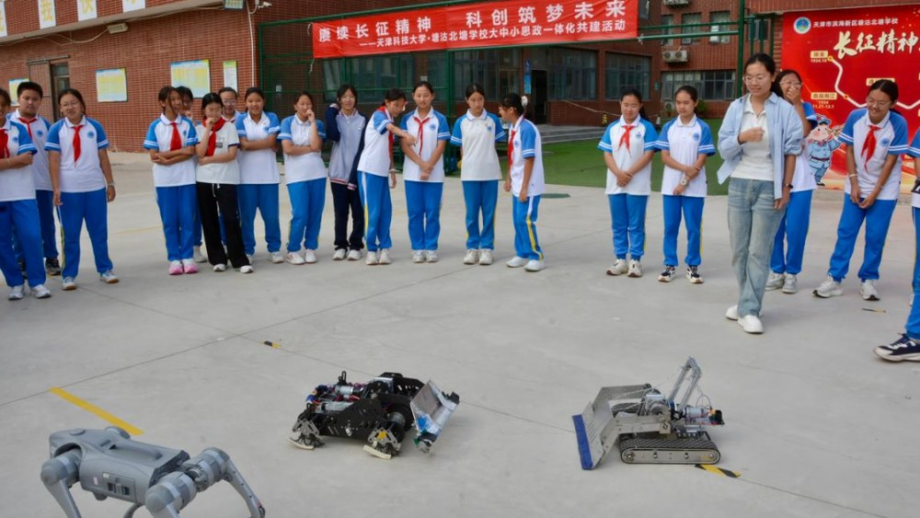
On the school playground, the science and innovation showcase and hands-on experience session was in full swing. The Zhidian Science and Innovation Club brought along its entries for the 2026 National Robot Competition, with three self-built innovation vehicles, a robot dog and other exhibits all on display. Students from four Grade 7 classes observed the robotic equipment up close in small groups and interacted with it, experiencing the appeal of modern technology first-hand. By drawing an analogy between the many challenges of robot R&D and debugging on the one hand and the countless hardships along the Long March on the other, the students came to appreciate the "New Long March" spirit demanded on today's path of scientific research.
In the recording and broadcasting classroom on the fourth floor, a sharing session on young people's hometown revolutionary stories was held at the same time. The session was livestreamed to the other grades and condensed into a themed class meeting for study across the whole school. Student representatives from the College of Electronic Information and Automation of TUST recounted the revolutionary history of their hometown Fangcheng in Henan Province. They recalled the arduous past of the 25th Red Army's "Young Iron Army" as it fought through blood and fire, told the story of Major General Li Zaishan — who devoted himself to the "Two Bombs, One Satellite" programme and served the motherland in anonymity — and recounted the heroic deeds of Martyr Du Fengrui, who defended the nation's airspace. Drawing on their own educational journeys, the student speakers shared how they had chosen to apply for the microelectronics major, and expressed their resolve to tackle the challenges of FPGA military-industrial chips and to serve the country through science and technology, thereby setting an example for the primary and secondary school students.
This joint primary–secondary–university practice activity on integrated ideological and political education achieved a deep integration of revolutionary culture inheritance, national defence science education and science-innovation practice. It not only led young people to look back on the history of the Long March and to appreciate the ideals and convictions of the revolutionary forebears, but also — through vivid, hands-on science and innovation practice — kindled in the young students the spark of a passion for science and an ambition to serve the nation through technology, carrying the Long March spirit across generations and letting it take root among young people in the new era. |