|
Location: 首页 >> NewsInfo >> LatestNews >> Inter-University Exchanges for Development, Benchmarking Against the Advanced for a New Chapter publish date:2026-04-28
To thoroughly implement the national strategy for the development of the integrated circuit industry, precisely benchmark against the educational experience of leading universities, and promote the high-quality development of the College’s integrated circuit discipline and programme development, talent cultivation, employment work and industry–academia–research cooperation, Zhou Weibin, Deputy Secretary of the Party Committee and Dean of the College of Electronic Information and Automation, recently led a special-purpose research visit to the School of Integrated Circuits of Guangdong University of Technology, accompanied by relevant College leaders and backbone teachers.
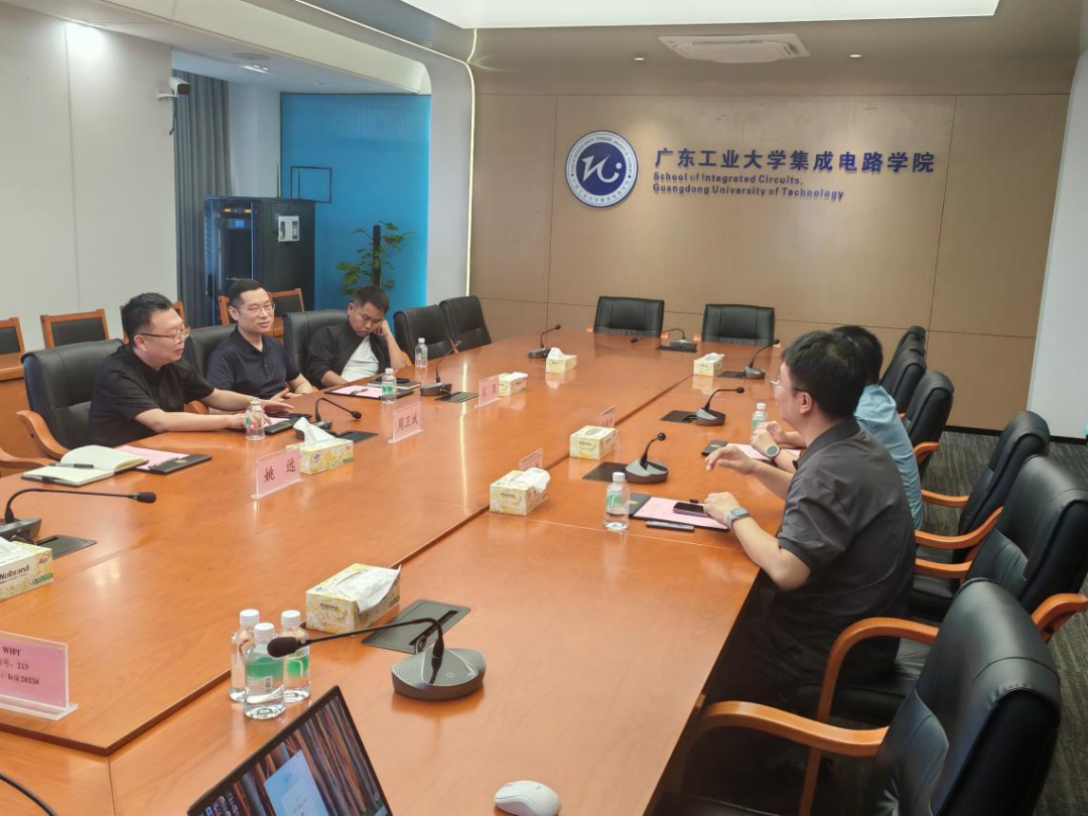
▲ The symposium at the School of Integrated Circuits, Guangdong University of Technology Liu Yuan and Li Jianzhong, Vice Deans of the School of Integrated Circuits of Guangdong University of Technology, extended a warm welcome to the delegation. At the symposium, Liu Yuan gave a detailed introduction to the School’s development history, disciplinary layout, faculty team building, talent cultivation model, research platform construction and industry–academia–research cooperation, focusing on the School’s mature experience and innovative measures in optimising the integrated circuit curriculum system, building practical teaching bases, serving graduate employment and carrying out college–enterprise collaborative education. Zhou Weibin expressed his gratitude for the warm reception and generous experience sharing of the School of Integrated Circuits of Guangdong University of Technology, and briefly introduced the current state of integrated circuit discipline development at the College of Electronic Information and Automation of Tianjin University of Science and Technology, its development planning, and the opportunities and challenges it currently faces. He noted that the School of Integrated Circuits has distinctive educational features, close industrial alignment and remarkable development results, and that many of its experiences and practices are highly instructive, providing a valuable reference for the College to solve its development problems and clarify its path of development.
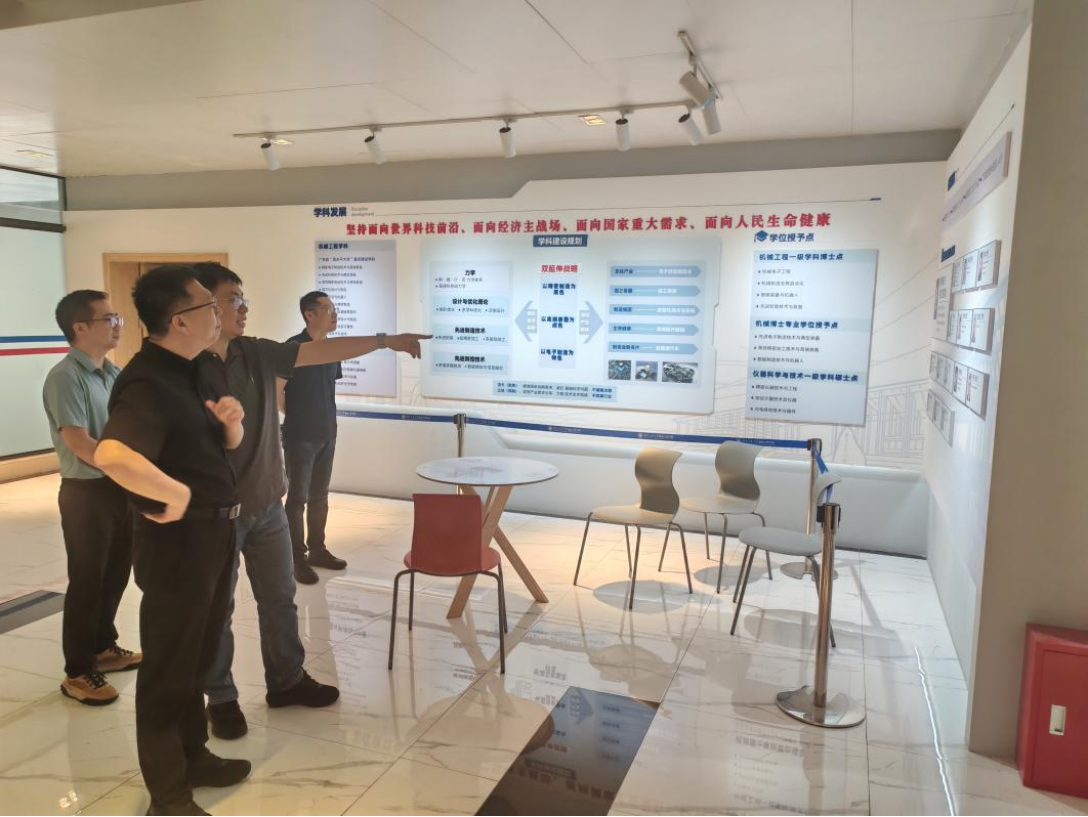
▲ Visiting the School’s achievements exhibition The two sides held in-depth exchanges and discussions on key topics such as the optimisation of integrated circuit disciplines and programmes, the cultivation of the faculty team, the formulation of innovative talent cultivation programmes, the enhancement of students’ employment competitiveness, the joint construction of research platforms and the deep integration of industry, academia and research. They candidly shared their working ideas and practical cases and reached a preliminary consensus on further strengthening inter-university linkage and expanding areas of cooperation. The on-site exchange was lively, pragmatic and efficient.
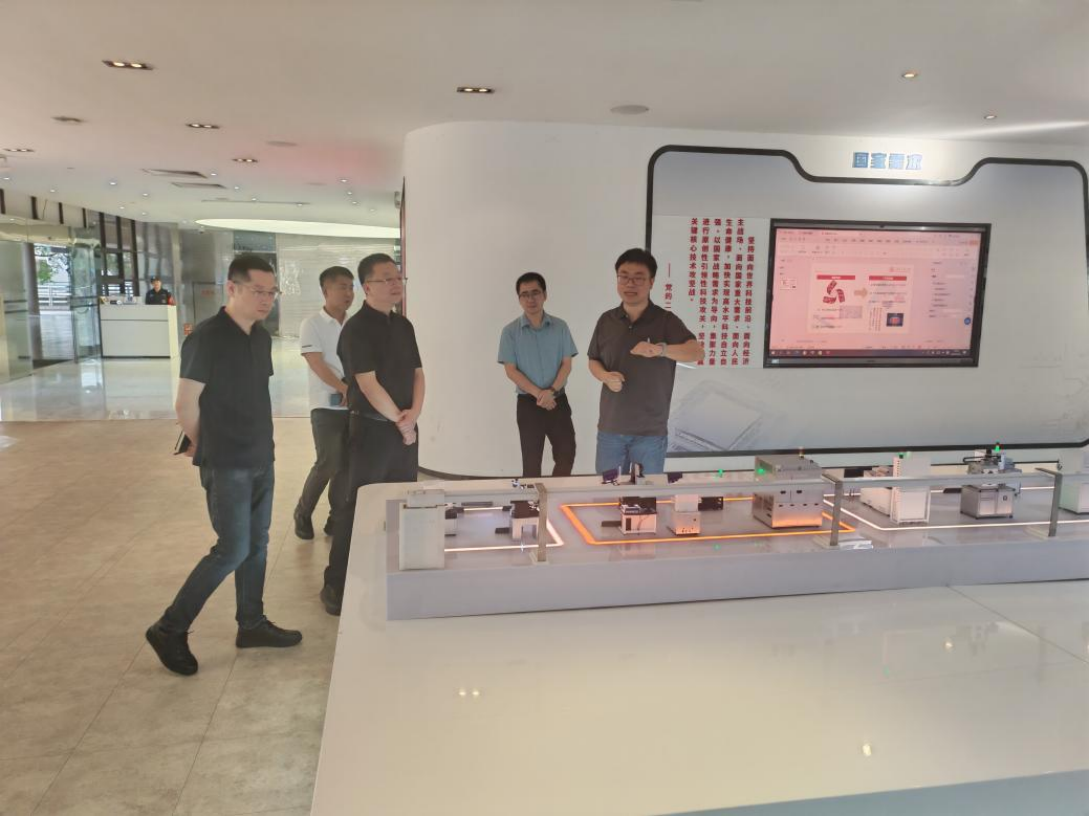
▲ Touring the laboratories and the computing centre After the symposium, the delegation toured the School’s laboratories, computing centre and other teaching and research facilities, gaining a close-up understanding of its specific practices in laboratory equipment configuration, practical teaching and the transformation of research achievements, and learning first-hand from its advanced educational philosophy and management model. This research visit is an important measure for the College to benchmark against the advanced, address its shortcomings and promote the high-quality development of the integrated circuit discipline. Next, the College will carefully review and summarise the findings of the visit, fully absorb and draw on the advanced experience of the School of Integrated Circuits of Guangdong University of Technology, and, in light of the College’s actual conditions, focus on the core tasks of discipline development, optimise the talent cultivation system, strengthen employment services and support, deepen collaborative innovation in industry–academia–research, continuously improve the level of education and the quality of talent cultivation, and contribute more to serving the development of the national integrated circuit industry. |